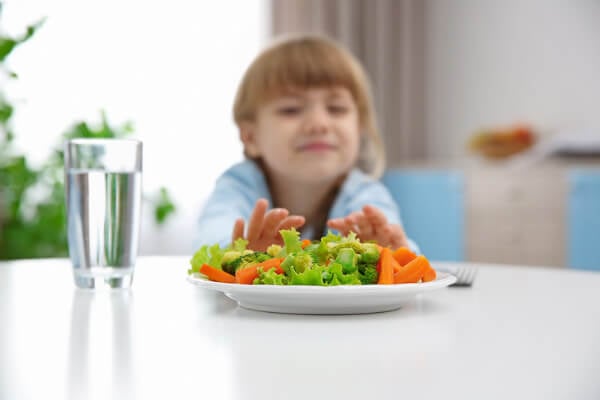
My Child Won't Eat Fruit or Vegetables
How Can I Get More Fiber Into Their Diet?
If your child wets the bed, their diet is something worth paying attention to. The bowel and bladder sit very close together, and when too much poo builds up in the bowel, it can press against the bladder and contribute to wet nights. One way to help prevent constipation is to make sure your child is getting enough fiber in their diet.
But here’s the problem. Parents are often told to give their children more fruit and vegetables. Great! But what if your child won’t eat them?
If broccoli is treated with suspicion and the fruit bowl might as well be full of plastic decorative fruit, don’t give up! There are plenty of simple ways to add more fiber to your child’s diet without turning every meal into an argument.
How Much Fiber Does My Child Need?
As a general guide, Australian Nutrient Reference Values recommend:
- Children aged 4-8: 18 g of fiber a day
- Boys aged 9-13: 24 g a day
- Girls aged 9-13: 20 g a day
You don’t need to count every gram your child eats. These figures simply give you an idea of what you are aiming for. If your child currently eats very little fiber, increase it gradually and try to make sure they are drinking enough during the day.
Start With What Your Child Already Eats
Before introducing completely new foods, look at what your child already likes. Sometimes the easiest way to increase fiber is simply to swap a food your child already eats for a higher-fiber version. That way, you’re not asking them to eat something completely different.
Here are some simple swaps you could try:
- Bread: Swap white bread for wholemeal or higher-fiber bread.
- Wraps: Choose wholegrain or higher-fiber wraps instead of white ones.
- Pasta: Try wholemeal or higher-fiber pasta instead of regular pasta.
- Rice: Try brown rice instead of white rice.
- Breakfast cereal: Choose oats or a higher-fiber cereal instead of a low-fiber one.
- Crackers: Look for wholegrain or higher-fiber crackers instead of regular ones.
You don’t need to cut carbohydrates out of your child’s diet. Foods such as bread, pasta, rice and cereals can all be part of a healthy diet. The idea is simply to choose versions that contain more fiber whenever you can.
Fiber also comes from foods such as peas, lentils, chickpeas, beans, nuts, nut butters, chia seeds, ground flaxseed and popcorn. Some of these may already be foods your child enjoys, while others can be added to meals and snacks without making big changes to what they eat.
Check the Fiber on the Packet
So how do you know which products contain more fiber? The easiest way is to check the nutrition information on the back of the packet. You can find more information about reading nutrition labels on the Food Standards Australia New Zealand website.
When comparing two similar products, such as two different breads or breakfast cereals, look at the per 100 g column. This tells you how much fiber each product contains in the same amount of food, making it easier to compare them.
As a simple guide, when comparing similar foods, if fiber is listed, look for:
- 3 g or more of fiber per 100 g: A useful amount of fiber.
- 6 g or more of fiber per 100 g: A higher-fiber option worth considering.
The higher the fiber content, the more fiber your child will get from the same amount of food. For example, if one bread contains 2.5 g of fiber per 100 g and another contains 7 g, the second bread gives your child almost three times as much fiber.
Try Serving Fruit Differently
A fruit platter worked surprisingly well with my own children. They wouldn’t necessarily take a piece of fruit from the bowl, and they often wouldn’t eat the fruit in their lunch boxes either. But when I chopped several different fruits and put them on a platter, they ate them. It was the same fruit, just presented differently.
You could arrange different fruits into their own sections around a large plate, making a colourful fruit platter that looks inviting. You could also make fruit kebabs or simply leave a plate of chopped fruit on the table after school. There’s no need to make a big announcement about how healthy it is. Just put it out and see what happens. Where appropriate, leave the edible skins on apples and pears for a little extra fiber.
Fruit salad is another option. You can make it more appealing by adding something your child already enjoys, such as yoghurt, custard, a little jelly, chia seeds, oats, granola or chopped nuts, where appropriate. Yes, custard or jelly adds something sweet, but if a little custard means your child happily eats several different fruits, I wouldn’t get too hung up on making it perfect.
Make Smoothies They Want to Drink
Smoothies can be an easy way to add fruit, oats and seeds, but they still have to taste good. There is little point making a magnificent green smoothie with kale, spinach, chia, flaxseed and half the vegetable garden if your child takes one look and walks away. Unless, of course, you call it the Monster Mega Muscle Smoothie and they go for it.
Start with flavors they already like. Here are three combinations to try. You can add a little extra milk, coconut water or other liquid as needed to get the consistency your child prefers.
Once your child is happily drinking smoothies, you can experiment gradually with oats, chia seeds, ground flaxseed, 1/4 of an avocado, cucumber or a little baby spinach. Avocado makes smoothies creamy without adding much flavour, while cucumber goes particularly well with apple, pineapple, kiwi fruit and mint. The trick is to avoid adding everything at once. Let them enjoy smoothies first, then try small changes. If they won’t drink one, you could pour it into icy-pole moulds and freeze it. Apparently putting something on a stick can make it considerably more exciting!
Add Fiber to Familiar Meals and Snacks
You don’t always need a completely new meal. There may be room to add fiber to something your child already eats:
- Bolognese: Add finely grated carrot or zucchini, or blend cooked lentils into the sauce.
- Tacos and burritos: Add mashed kidney beans or black beans to the mince.
- Meatballs: Add grated vegetables.
- Pizza: Use a higher-fiber base and blend vegetables into the tomato sauce.
- Porridge: Add banana, berries, chia, flaxseed or peanut butter.
- Yoghurt: Add fruit, oats, chia or ground flaxseed.
- Muffins and pikelets: Add oats, banana, grated apple, berries or flaxseed.
- Toast: Try peanut butter, avocado or baked beans on higher-fiber bread.
If your child spots a lentil at 20 paces, blending it into a sauce is always an option. Ordinary snacks can help too. Depending on what your child likes, you might offer popcorn, wholegrain crackers, hummus with slices of carrots, peanut butter on higher-fiber crackers or homemade oat muffins. Nuts may be an option where appropriate. Raisins, dried apricots, prunes and dates with the stone removed are other possibilities; some children who refuse fresh fruit are quite happy to eat dried fruit.
If your child refuses a food once or twice, don’t assume they will never eat it. Sometimes children need to see or try something several times before it feels familiar. Keep offering small amounts occasionally without making a fuss about whether they eat them.
Increase Fiber Gradually, and Remember Fluids
If your child isn’t used to eating much fiber, it’s best to increase it slowly. Suddenly adding lots of chia seeds, flaxseed, whole grains or beans to their diet can cause bloating, wind and tummy discomfort. Start with small amounts and gradually add more as their digestive system gets used to it.
For more information, the National Institute of Diabetes and Digestive and Kidney Diseases (NIDDK) has helpful guidance on fiber and constipation in children.
Drinking enough water is important too, especially when increasing fiber. For children who wet the bed, encourage plenty of fluids earlier in the day, rather than drinking large amounts in the evening to make up for not drinking enough during the day.
What if My Child Is Already Constipated?
Diet can help support healthy bowel habits, but if your child is already constipated or has a build-up of poo in their bowel, adding oats or chia seeds may not be enough to solve the problem.
Some signs of constipation include:
- Hard or painful poos
- Very large poos
- Going several days without pooing
- Poo marks or accidents in underwear
- Tummy pain or bloating
- Straining when using the toilet
- Avoiding the toilet or holding on
It’s also worth knowing that a child can poo every day and still be constipated, particularly if they’re not emptying their bowel properly. I’ve written more about that connection in How Constipation Can Cause Bedwetting (Even When Kids Poo Every Day).
If you’re concerned that your child may be constipated, talk to their doctor. They may need more than dietary changes to get their bowels working properly again.
If Your Child Basically Eats Beige Food, Where Do You Start?
If everything above sounds unrealistic for your child right now, choose just one small change. It might be swapping their usual bread for a higher-fiber version, adding oats to a smoothie or finding one new snack they’re happy to eat. Once that change becomes familiar, try another.
You don’t need to transform your child’s diet overnight. The aim is to help their bowels work as well as possible. Several small changes made consistently are usually more realistic than trying to convince a reluctant child to suddenly fall in love with broccoli!
References
National Health and Medical Research Council (NHMRC). Nutrient Reference Values for Australia and New Zealand Including Recommended Dietary Intakes. Australian Government Department of Health and Ageing and New Zealand Ministry of Health.
Nevéus T, Fonseca E, Franco I, Kawauchi A, Kovacevic L, Nieuwhof-Leppink A, et al. Management and treatment of nocturnal enuresis—an updated standardization document from the International Children’s Continence Society. Journal of Pediatric Urology. 2020;16(1):10–19. doi:10.1016/j.jpurol.2019.12.020.
National Institute of Diabetes and Digestive and Kidney Diseases (NIDDK). Eating, Diet, & Nutrition for Constipation in Children. National Institutes of Health.
Food Standards Australia New Zealand (FSANZ). Nutrition information panels. Food Standards Australia New Zealand.
Nekitsing C, Blundell-Birtill P, Cockroft JE, Hetherington MM. Systematic review and meta-analysis of strategies to increase vegetable consumption in preschool children aged 2–5 years. Appetite. 2018;127:138–154. doi:10.1016/j.appet.2018.04.019.
Share this post!