Do Bedwetting Alarms Really Work?
Pros, cons and whether a bedwetting alarm is right for your child
Do bedwetting alarms really work? If your child is still wetting the bed, you’ve probably wondered whether a bedwetting alarm is the answer. Some families swear by them. Others give up after a few exhausting weeks of broken sleep. So, do they actually work? The short answer is yes – for many children.
Bedwetting alarms are supported by research and have helped many children become dry. However, they don’t work for every child because they don’t address the underlying factors that may be contributing to bedwetting.
Understanding how bedwetting alarms work, along with their advantages and limitations, can help you decide whether they’re the right choice for your family.
What Is a Bedwetting Alarm?
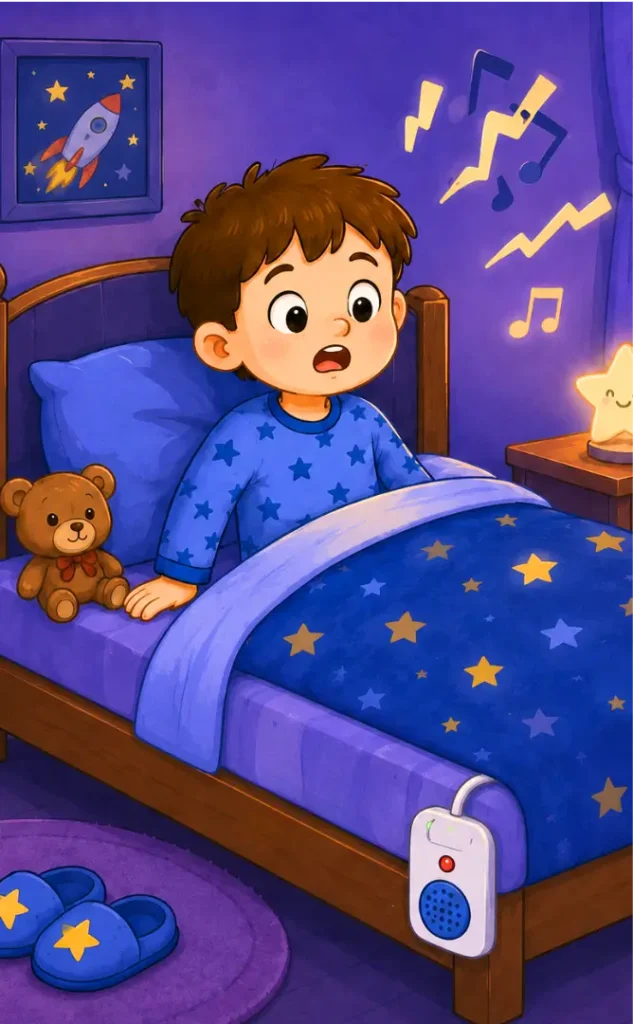
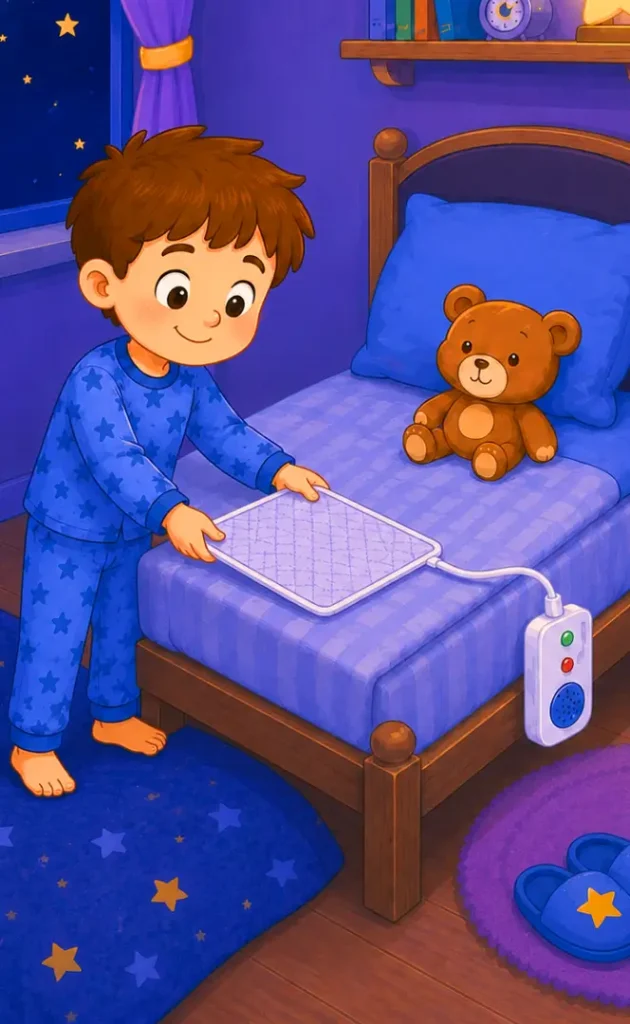
A bedwetting alarm is a device designed to help children learn to wake when their bladder is full during sleep. Most bedwetting alarms have two parts:
- A moisture sensor, attached to your child’s underwear or pyjamas, clipped to their clothing, or built into a bed sensor mat.
- An alarm unit, which makes a loud sound, vibrates, or does both when the sensor detects the first drops of urine.
What many parents don’t realise is that the alarm only activates after bedwetting has already begun. It doesn’t prevent the first drops of urine. Instead, it helps train your child’s brain to recognise the feeling of a full bladder and wake earlier over time.
How Does a Bed Wetting Alarm Work?
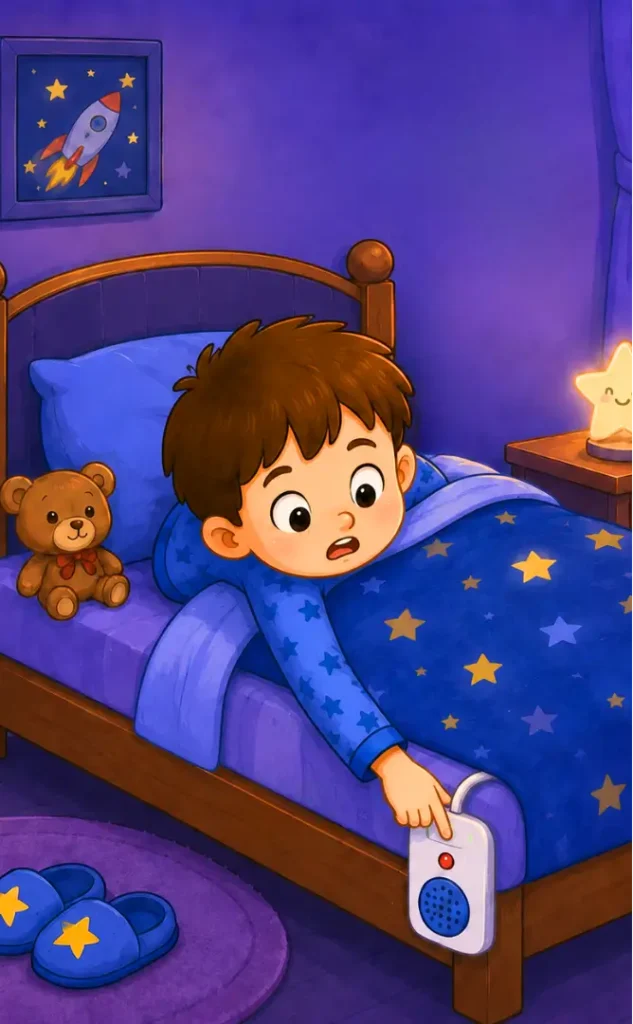
When the alarm detects the first drops of urine, it makes a loud sound, vibrates, or does both to wake your child. To help the learning process, your child should:
Each time this routine is followed, your child’s brain has another opportunity to strengthen the connection between a full bladder and waking to use the toilet. Over time, some children begin waking before the alarm is triggered, while others eventually sleep through the night without wetting the bed. This learning process is known as behavioural conditioning.
The more consistently the routine is followed, the greater the chance of success. However, bedwetting alarms work best when children wake to the alarm themselves and actively take part in the process every time. This is one of the main reasons they can work very well for some children but be much less effective for others.
What Are the Benefits of a Bedwetting Alarm?
Bedwetting alarms are recommended by many healthcare professionals because they are one of the most well-researched treatments for bedwetting.
For many families, they provide a medication-free option that may help strengthen the communication between the brain and bladder over time. When children respond well, the improvements can continue long after the alarm is no longer needed, making bedwetting alarms a worthwhile option to consider.
The Challenges of Using a Bedwetting Alarm
While bedwetting alarms can work well for some children, they aren’t without their challenges. Understanding these before you begin can help you decide whether a bedwetting alarm is the right choice for your family.
The Alarm Only Sounds After Bedwetting Has Started
Many parents assume the alarm prevents bedwetting, but it doesn’t. It only activates after the first drops of urine have been detected. That means every wet night still involves wet sheets, wet pyjamas and interrupted sleep.
Your Child Needs to Wake Up
One of the biggest challenges parents tell me about is that their child simply doesn’t wake up when the alarm sounds.
Many children who wet the bed appear to be deep sleepers. However, research suggests the issue isn’t necessarily that they sleep more deeply than other children, but that they have difficulty waking in response to a full bladder.
Over the years, I’ve spoken with parents whose child slept straight through the alarm while everyone else in the house woke up. If your child consistently sleeps through the alarm, it becomes much more difficult for the alarm to work as intended and can make the process far more demanding for the whole family.
It Can Disrupt the Whole Household
It’s not uncommon for parents, brothers and sisters to wake before the child does. If the alarm goes off more than once a night, several weeks of broken sleep can become exhausting for the whole family.
It Takes Time and Consistency
Although some children respond quite quickly, bedwetting alarms usually take time to work. According to Bladder & Bowel UK, it can take a few weeks before families notice signs that the alarm is working, although many children who respond well become dry within about three to four months.
Early signs that the alarm is working include waking more quickly to the alarm, smaller wet patches, the alarm sounding later in the night, and the first dry nights. These early signs are usually seen within the first three to four weeks.
To give the alarm the best chance of success, children should continue using it until they have achieved at least 14 consecutive dry nights. Families need to be prepared for this commitment, as consistency is one of the most important factors in success.
Some Children Don’t Like Wearing an Alarm
Over the years, I’ve spoken with parents who excitedly bought an alarm, only to discover their child was frightened the first time it went off and refused to wear it again. Others simply found the sensor uncomfortable and didn’t want to wear it.
It Doesn’t Address the Underlying Cause
For me, this is perhaps the biggest limitation. A bedwetting alarm helps teach a child to wake when they begin to wet, but it doesn’t investigate why the bedwetting is happening.
Contributing factors may include constipation, delayed brain-bladder communication, mouth breathing, enlarged tonsils or adenoids, allergies, fragmented sleep, bladder habits, hydration, diet, weak pelvic floor muscles, and many other factors unique to your child.
Some Families Stop Using Them Before They Work
For some families, the practical challenges eventually become too much. When the alarm wakes parents or siblings before it wakes the child, weeks of broken sleep, frustration, and the time involved can make it difficult to keep going.
I’ve also heard from many parents who have had clips break, sensors stop working, or alarms become unreliable over time, adding to the frustration. Unfortunately, stopping early means many families never find out whether the alarm may have worked if they’d been able to continue.
False Alarms Can Happen
Some bedwetting alarms can be triggered by heavy sweating during the night, especially in warm weather or if your child tends to perspire a lot while sleeping. This can lead to false alarms, unnecessary sleep disruption, and frustration for both your child and the rest of the family.
What If a Bedwetting Alarm Doesn't Work?
If a bedwetting alarm hasn’t worked for your child, it doesn’t mean they can’t become dry. It simply means the alarm may not have been the right solution for your child, or that there may be other factors contributing to their bedwetting.
Over the years, I’ve worked with many families who came to Stay Dry at Night after trying a bedwetting alarm. Some had seen a little improvement while using the alarm, others became dry for a while before the bedwetting returned, and some found the broken sleep, frustration, or practical challenges simply became too much.
One thing became very clear to me – children wet the bed for lots of different reasons. That’s why I believe it’s so important to understand why your child is wetting the bed, rather than simply focusing on the wet nights themselves.
Looking Beyond the Alarm
Instead of focusing on just one aspect of bedwetting, I’ve designed the Stay Dry at Night program to help parents identify and address the many different factors that may be contributing to their child’s bedwetting. It guides you through them step by step, so you’ll always know what to focus on next.
Inside the program, you’ll explore areas such as:
- Building stronger communication between the brain and bladder
- Constipation and bowel health
- Mouth breathing and sleep quality
- Bladder habits and hydration
- Diet and possible bladder irritants
- Weak pelvic floor muscles
- Other factors that may be contributing to your child’s bedwetting
Just as importantly, I’ve designed the program to be easy for parents to follow and enjoyable for children to take part in. The weekly steps are practical, easy to follow, and designed to fit into everyday family life.
Here’s what one parent shared after completing the program:
“I was amazed at how easy the program was for my 6 year old girl to follow. She enjoyed every part of it and mostly the relaxation. We saw results within the first few nights and now she is completely dry at night.” – Parent, February 2022
The program also includes gentle bedtime recordings that help reinforce communication between the brain and bladder. In the Premium Program, the recordings can include your child’s name and favourite activities, making the experience feel even more personal. Many children look forward to listening to their recording as part of their bedtime routine.
“The recordings are so gentle and positive and he really enjoys listening to them. He actually looks forward to going to bed with this routine in place and is so pleased with himself when he wakes up dry!” – Parent, May 2024
When parents feel confident, children enjoy taking part, and everyone understands the plan, the journey becomes much less stressful for the whole family.
Which Bedwetting Alarm Should You Choose?
There is no single bedwetting alarm that will suit every child. The best choice will depend on your child’s age, how easily they wake, whether they are comfortable wearing a sensor, and what will work best for your family.
If you decide that a bedwetting alarm is the right option for your child, here are a few you may wish to compare. The links below are affiliate links, which means I may receive a small commission if you choose to make a purchase, at no extra cost to you.
Conclusion
Bedwetting alarms have helped many children become dry and, for some families, they may be exactly the right choice. However, they aren’t the right solution for every child. If your child sleeps through the alarm, finds it frightening, or has other factors contributing to their bedwetting, simply waking them after they begin to wet may not address the bigger picture.
Over the years, I’ve learnt that understanding why your child is wetting the bed is often the key to helping them become dry. Once you understand what’s contributing to the bedwetting, you’ll have a much clearer idea of what to focus on, both now and if bedwetting returns in the future.
Most importantly, please don’t give up hope. Many children who continue to wet the bed go on to become dry once the right contributing factors are identified and addressed.
Whether you decide to try a bedwetting alarm or explore a more comprehensive approach like Stay Dry at Night, I hope this article has helped you feel more informed and more confident about your next step.
References
Caldwell PHY, Nankivell G, Sureshkumar P. Simple behavioural interventions for nocturnal enuresis in children. Cochrane Database of Systematic Reviews. 2013.
https://pubmed.ncbi.nlm.nih.gov/23881652/
Continence Health Australia. Supporting Bladder and Bowel Control in Children.
https://www.continence.org.au/about-incontinence/children-and-young-people/supporting-bladder-bowel-control-children/
National Institute for Health and Care Excellence (NICE). Nocturnal Enuresis: The Management of Bedwetting in Children and Young People (CG111).
https://www.nice.org.uk/guidance/cg111
Nevéus T, Fonseca E, Franco I, Kawauchi A, Kovacevic L, Nieuwhof-Leppink A, Raes A, Tekgül S, Yang SS, Rittig S. Management and Treatment of Nocturnal Enuresis: An Updated Standardization Document From the International Children’s Continence Society. Journal of Pediatric Urology. 2020;16(1):10-19.
https://doi.org/10.1016/j.jpurol.2019.12.020
Nigri P, Nigri L, Peccarisi L. Overview on the Management of Nocturnal Enuresis in Children in General Pediatrics. Global Pediatrics. 2024.
https://doi.org/10.1016/j.gpeds.2024.100207
Share this post!
We’d Love to Hear From You!
Have you tried a bedwetting alarm with your child? Did it work well, or did you face challenges along the way?
Share your experience in the comments below. Your story may help another family who is trying to decide which approach is right for their child.